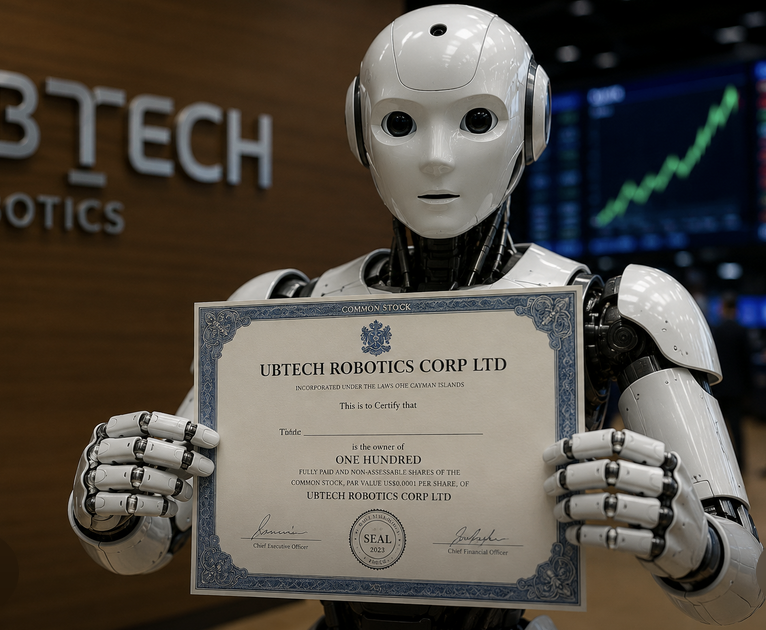
Humanoid Robot Stocks: Investing in the Next Generation of Robotics

by Fred Fuld III

Humanoid robots have moved rapidly from science fiction into the real world. Robots that can walk on two legs, manipulate objects with human-like hands, climb stairs, perform physical tasks and interact with people are now being developed by some of the world’s most innovative technology companies.

For investors, however, there is a major problem: there are still very few pure-play publicly traded humanoid-robot companies. Many of the best-known developers—including Figure AI, Apptronik and 1X—remain privately held, while companies such as Tesla (TSLA), Amazon (AMZN) and Hyundai have humanoid-robot programs that represent only a portion of much larger businesses.

One company stands out because it has already reached the public markets: Unitree Robotics, officially Hangzhou Yushu Technology Co., Ltd. Although Unitree is now publicly traded, U.S. investors cannot simply purchase its shares on the NYSE or Nasdaq. The company is listed in China on the Shanghai Stock Exchange’s STAR Market under the ticker 688836.

Unitree Robotics: A Pioneer in Low-Cost Robots

Unitree Robotics is one of the most important companies in the emerging humanoid-robot industry. The Hangzhou, China-based company was founded in 2016 by Wang Xingxing, who serves as its founder, CEO and CTO.

Wang’s interest in robotics began before Unitree existed. While studying engineering, he developed a quadruped robot called XDog. The project attracted attention within the robotics community and eventually helped provide the foundation for Unitree. After a brief period working at drone manufacturer DJI, Wang left to establish his own robotics company.

Unitree initially concentrated heavily on four-legged robots, rather than humanoids. This was an important strategic decision because quadruped robots can be significantly less expensive and mechanically simpler than sophisticated humanoids while still demonstrating impressive mobility.

The company’s robot dogs became internationally recognizable. Unitree emphasized relatively affordable, high-performance robots that could be used by researchers, universities, developers, businesses and consumers.

That philosophy eventually extended to humanoid robots.

From Robot Dogs to Humanoids

Unitree’s humanoid lineup includes robots such as the H1, G1 and R1. The G1, in particular, attracted considerable attention because Unitree offered a relatively inexpensive humanoid platform compared with many competing systems.

Unitree says its robots incorporate technologies involving motion control, perception, artificial intelligence, manipulation and robotic hardware. The company’s product portfolio now extends beyond quadrupeds and humanoids to robotic arms, components and other robotic systems.

The company’s strategy is significant for investors because Unitree is attempting to attack the robotics market from a different direction than companies such as Boston Dynamics.

Rather than concentrating exclusively on extremely expensive, highly sophisticated robots, Unitree has emphasized lower-cost, commercially accessible robots. That could become important if humanoid robotics eventually develops into a mass market.

The company has also demonstrated its robots in highly visible settings. In 2025, for example, 16 Unitree H1 humanoid robots appeared in a performance during China’s Lunar New Year television broadcast, giving the company enormous exposure among the Chinese public.

Unitree Goes Public

For investors, the biggest development came in 2026.

Unitree completed its initial public offering on the Shanghai Stock Exchange’s STAR Market on August 19, 2026. Its stock trades under the symbol 688836. It became the first humanoid-robot company to list on China’s mainland stock market.

The IPO was priced at 150.80 yuan per share and raised approximately 6.1 billion yuan, or about $900 million. The stock’s debut was extraordinary. It opened at 1,100 yuan and ultimately closed its first trading day at 845 yuan—approximately 460% above the IPO price. At the closing price, Unitree’s market capitalization was approximately $50 billion.

That spectacular first day illustrates both the enthusiasm surrounding humanoid robotics and one of the major risks facing investors: valuation.

A company can have enormous technological potential while its stock can simultaneously be priced too aggressively. Unitree’s post-IPO valuation therefore deserves as much attention as its robots.

The Problem for U.S. Investors

There is an important distinction between being a publicly traded company and being easily accessible to American investors.

Unitree is publicly traded, but it is not listed on a U.S. stock exchange. Its shares trade on the Shanghai Stock Exchange’s STAR Market under 688836. Consequently, an investor using a typical U.S. brokerage account cannot simply enter “688836” in the same way he or she might purchase Apple, Nvidia or Tesla.

This makes Unitree an unusual investment opportunity for American investors. It is perhaps the closest thing to a major publicly traded pure-play humanoid robotics company, but its Chinese listing creates additional issues involving market access, regulations, currency, geopolitical risk and Chinese securities-market rules.

There is also another consideration. Unitree’s business is not exclusively humanoid robots. The company has historically been an important developer of quadruped robots and continues to operate in several areas of robotics. Nevertheless, its increasing emphasis on humanoids makes it one of the most direct publicly traded ways to participate in the humanoid-robotics industry.

UBTECH Robotics: A Publicly Traded Humanoid-Robot Pioneer

If Unitree Robotics represents the new generation of Chinese humanoid-robot companies, UBTECH Robotics (UBTRF) represents one of the industry’s earlier pioneers—and, importantly for investors, it is already publicly traded.

UBTECH Robotics Corp. Ltd. was established in March 2012 and is headquartered in Shenzhen, China. The company describes itself as a developer of humanoid and smart-service robots, with technology covering the hardware, software and artificial-intelligence systems required to operate humanoid robots. Unlike Unitree, whose shares trade on China’s Shanghai Stock Exchange, UBTECH is listed on the Main Board of the Hong Kong Stock Exchange under the ticker 9880.HK. It began trading on December 29, 2023, making it the first humanoid-robot company listed on the main board of the Hong Kong exchange. Its IPO price was HK$90 per share, giving the company an initial market capitalization of approximately HK$37.6 billion. 

For investors looking for a publicly traded company with substantial direct exposure to humanoid robotics, UBTECH is therefore one of the most interesting stocks to investigate.

UBTECH: From Service Robots to Humanoids

UBTECH (UBTRF) did not begin with the industrial humanoids that are attracting so much attention today.

The company originally developed a broad range of service robots, including robots designed for education, commercial applications, customer service and other human-interaction environments. Its long-term strategy was to develop what it calls a full-stack robotics technology platform—essentially controlling the hardware, software, artificial intelligence and robotic-control technologies necessary to build and operate robots.

That foundation eventually led the company into humanoid robotics.

UBTECH’s Walker family became the centerpiece of this effort. The company has progressively developed more sophisticated versions of Walker, with the robots moving from demonstrations and research toward actual industrial applications.

This transition is particularly important from an investment standpoint.

A robot that can walk across a stage is impressive. A robot that can spend thousands of hours performing useful work inside a factory is potentially a business.

UBTECH is attempting to make that transition.

Walker: UBTECH’s Humanoid Robot Family

UBTECH’s best-known humanoid platform is Walker.

The company has developed several generations and versions of Walker for different applications. More recently, its attention has shifted strongly toward industrial manufacturing.

The company’s Walker S series is designed to operate in industrial environments, particularly factories and automotive manufacturing facilities.

In 2024, UBTECH reported that its Walker S industrial humanoids had begun training in multiple automobile factories. In 2025, the company introduced Walker S2, its next-generation industrial humanoid, and began mass production and deliveries. 

Walker S2 incorporates an interesting feature that illustrates how UBTECH is thinking about commercial deployment: a hot-swappable autonomous battery system.

Rather than having the robot stop working for long periods while its battery recharges, the system is designed to allow the robot to change batteries and return to work. UBTECH says the system is intended to support continuous operation in industrial environments. 

That may sound like a relatively minor engineering feature, but it could be extremely important commercially.

A factory operator doesn’t necessarily care whether a humanoid robot has the most sophisticated artificial intelligence in the world. The operator wants to know:

How many hours can the robot work? How reliable is it? How much does it cost? And how quickly does it pay for itself?

UBTECH’s development of Walker S2 suggests the company is increasingly focused on those questions.

A Dramatic Increase in Humanoid Revenue

Perhaps the most important development for investors appears in UBTECH’s 2025 annual report.

The company’s total revenue increased from approximately RMB 1.305 billion in 2024 to RMB 2.001 billion in 2025, an increase of 53.3%.

But the really remarkable number was humanoid robotics revenue.

Revenue from full-size embodied intelligent humanoid robot products and services increased from just RMB 35.6 million in 2024 to RMB 820.6 million in 2025.

That’s an increase of approximately 2,204%.

More importantly, humanoid robots became UBTECH’s largest source of revenue in 2025. 

That is an important distinction between UBTECH and many of the larger publicly traded companies promoting humanoid robots.

For Tesla, Optimus is potentially enormous—but Tesla’s current business is dominated by automobiles, energy and other activities.

For Nvidia, robotics could become a major source of demand for its chips and computing platforms—but Nvidia isn’t a robot manufacturer.

For UBTECH, humanoid robotics is becoming the core business itself.

The Company Is Not Yet Profitable

There is, however, an important caveat for investors.

UBTECH remains loss-making.

The company’s 2025 net loss was approximately RMB 789.8 million, although that represented a significant improvement from its approximately RMB 1.160 billion loss in 2024. At the same time, gross profit increased to RMB 753.8 million, while the gross margin improved from 28.7% to 37.7%. 

This is typical of a technology company attempting to commercialize an entirely new product category.

UBTECH is spending heavily on research, development, manufacturing capacity and commercialization while the humanoid market is still in its early stages.

The investment question is therefore not simply whether UBTECH can sell humanoid robots.

It is whether the company’s rapidly increasing revenue can eventually grow faster than its research, manufacturing and operating expenses, allowing the company to become sustainably profitable.

The Industrial Opportunity

UBTECH’s focus on manufacturing may give it an important advantage.

Factories are relatively structured environments. Robots don’t necessarily have to understand everything happening in the world. They need to perform specific tasks repeatedly and reliably.

UBTECH has been working with automobile manufacturers and other industrial companies to train its humanoids for manufacturing environments. Its 2025 annual report describes the year as a turning point in the industry, as humanoid robots began moving from demonstrations toward practical manufacturing applications. 

The company also introduced increasingly sophisticated dexterous hands and other components designed to allow robots to manipulate objects.

This is a critical technological challenge.

Walking is only one part of being humanoid.

A useful factory robot must be able to see an object, identify it, reach for it, grasp it, manipulate it, perform the required operation and respond appropriately if something unexpected happens.

UBTECH is attempting to build the entire system.

UBTECH’s Broader Robotics Business

UBTECH isn’t exclusively a humanoid company.

It continues to develop other smart-service robotics products and applications involving areas such as AI education, logistics, elderly care and business services. The company also operates consumer-oriented brands and products. 

Consequently, I would describe UBTECH as a near-pure-play humanoid robotics investment, rather than a company whose only product is humanoid robots.

But the distinction is becoming less significant as humanoid robotics becomes an increasingly large portion of the company’s revenue.

The 2025 results are particularly revealing: humanoid products and services generated RMB 820.6 million of the company’s RMB 2.001 billion in total revenue. 

In other words, humanoid robotics accounted for roughly 41% of total revenue in 2025.

That is a remarkable change from only a year earlier.

UBTECH vs. Unitree

UBTECH and Unitree make an interesting comparison for investors.

Unitree is younger, having been founded in 2016, and became publicly traded on the Shanghai Stock Exchange in August 2026. It is particularly well known for its quadruped robots and relatively affordable humanoids.

UBTECH, founded in 2012, has been publicly traded since 2023 and has spent years developing humanoid and service-robot technology.

The companies also have different approaches to the market.

Unitree has developed a reputation for relatively low-cost, highly mobile robots and has achieved considerable international visibility.

UBTECH has increasingly emphasized industrial humanoids, particularly robots designed to work in factories.

That makes the two companies interesting potential competitors—but also potentially complementary investments for someone attempting to understand the emerging robotics industry.

An Important Stock-Market Advantage

There is one major advantage UBTECH has over Unitree for many international investors:

UBTECH is already publicly traded in Hong Kong.

Its ticker is 9880.HK, however it can be bought Over-the-Counter in the US with the symbol UBTRF.

Unitree’s Shanghai listing is much less accessible to the typical American investor. UBTECH’s Hong Kong listing is more visible internationally and can be followed through conventional financial-market data services.

However, that doesn’t mean UBTECH is a U.S.-listed stock. An American investor should check whether his or her brokerage permits trading Hong Kong-listed securities before considering the shares.

The Investment Case

UBTECH presents an intriguing combination of rapid revenue growth, technological development and enormous potential market opportunity.

The strongest argument for the company is that humanoid robotics has moved beyond being simply a research project. UBTECH is already generating meaningful revenue from full-size humanoids, has begun mass production of Walker S2 and is working with industrial customers.

The biggest argument against the stock is that the industry remains extremely young and UBTECH is still losing money.

There is also intense competition.

Unitree, AgiBot, Tesla, Figure AI, Apptronik, 1X, Boston Dynamics and numerous other companies are racing to develop commercially viable humanoids.

And there is no guarantee that today’s leaders will remain the leaders five or ten years from now.

Bottom Line About UBTECH

For investors researching pure-play or near-pure-play humanoid robot stocks, UBTECH deserves a prominent place on the list.

It has an established history dating back to 2012, a publicly traded stock (9880.HK), a substantial proprietary robotics technology platform, and—most importantly—rapidly increasing revenue from actual humanoid robots.

The company’s 2025 results provide perhaps the strongest evidence yet that UBTECH is moving from being a robotics-development company toward becoming a commercial humanoid-robot manufacturer.

The most encouraging figure may be the jump in humanoid revenue from RMB 35.6 million to RMB 820.6 million in one year. The most important warning sign is that the company still recorded a RMB 789.8 million net loss.

For investors, that creates the central question surrounding UBTECH:

Can the company turn the spectacular growth of its humanoid-robot business into sustainable profitability?

If it can, UBTECH could become one of the most important publicly traded pure-play investments in the humanoid-robot revolution.

Agility Robotics: A Potential U.S. Pure Play

The situation is beginning to change in the United States.

One of the most interesting companies to watch is Agility Robotics (AGLT), the developer of the humanoid robot Digit.

Agility is pursuing a very different route to the public markets. Rather than conducting a conventional IPO, the company announced in June 2026 that it would merge with Churchill Capital Corp XI (CCXI), a special purpose acquisition company, commonly known as a SPAC.

The transaction values Agility at approximately $2.5 billion and is expected to provide more than $600 million of gross proceeds. The proposed combined company is expected to trade on Nasdaq under the ticker AGLT.

What Is a SPAC?

A SPAC is essentially a publicly traded shell company created to raise money and subsequently acquire or merge with a private company.

Instead of Agility going through the traditional IPO process, Churchill Capital Corp XI provides the publicly traded vehicle through which Agility can become a public company.

The process is generally:

Private Agility Robotics → merger with Churchill Capital Corp XI → public Agility Robotics → expected ticker AGLT

As of August 2026, the transaction has not yet completed. The companies have stated that they expect the transaction to close during 2026, subject to shareholder approval, SEC review, regulatory approvals and other customary closing conditions.

Until the transaction closes, investors should not treat AGLT as an already-trading stock.

Agility’s Digit Robot

Agility’s flagship product is Digit, a bipedal humanoid robot designed primarily for industrial and logistics applications.

This is an important distinction between Agility and some of the companies pursuing humanoids for the consumer market.

Agility is focusing heavily on environments such as warehouses and manufacturing facilities, where robots could perform repetitive physical tasks that currently require human workers.

The company’s strategy is therefore relatively straightforward: build a humanoid robot capable of operating in environments designed for humans without requiring those environments to be completely redesigned.

That could ultimately be one of the most valuable characteristics of humanoid robots.

A factory or warehouse is already designed around human workers. A robot that can walk through the same doors, navigate the same aisles, reach the same shelves and manipulate the same equipment potentially can be introduced without rebuilding the entire facility.

Agility has reported more than 65,000 operating hours for Digit at customer sites and has announced more than $300 million in multi-year orders for its next-generation Digit v5 robot.

Unitree vs. Agility

The two companies represent interestingly different investment opportunities.

Unitree is already public, but its shares trade in China. It has a broad robotics portfolio, a substantial existing business and a particularly strong emphasis on relatively affordable robots.

Agility, by contrast, is still private until its SPAC transaction closes, but it could become one of the first U.S.-listed pure-play humanoid robotics companies.

For an American investor, the Agility transaction could therefore be especially significant.

If the merger is completed and AGLT begins trading on Nasdaq, investors will have something that has been difficult to find: a U.S.-listed company whose primary investment story is humanoid robotics.

The Larger Humanoid-Robot Investment Universe

Unitree and Agility are only part of the story.

Other important humanoid developers include Figure AI, Apptronik and 1X Technologies. These companies have attracted substantial investment and generated considerable interest, but they remain private companies.

There are also several large public companies with major humanoid projects:

  • Tesla — developing Optimus
  • Hyundai Motor — owns Boston Dynamics, developer of Atlas
  • Amazon — has invested in and tested humanoid robotics
  • XPeng — developing humanoid robots in addition to electric vehicles
  • Nvidia — provides critical AI computing and robotics technology

These companies offer investors exposure to robotics, but they are not pure plays. A shareholder purchasing Tesla, for example, is buying an automobile, energy, artificial-intelligence and technology company—not simply a humanoid robotics company.

That distinction matters.

Why Humanoid Robots Could Become a Major Investment Theme

The investment case for humanoid robots rests on a relatively simple proposition.

The world has millions of jobs involving physical tasks that are repetitive, dangerous, physically demanding or difficult to fill. If robots can eventually perform some of those jobs economically, the potential market could be enormous.

The ultimate goal is not necessarily to build robots that look human merely for aesthetic reasons. The attraction of the humanoid form is that the world itself is designed for humans.

Humanoid robots could potentially work in factories, warehouses, hospitals, construction sites, retail stores, homes and other environments without requiring completely new infrastructure.

But there are substantial risks.

Humanoid robots remain expensive and technically challenging. Batteries, actuators, sensors, artificial intelligence, dexterous hands and reliable autonomous movement all have to work together. Demonstrations can look spectacular while commercial deployment remains difficult.

Investors should therefore distinguish between a robot that can perform an impressive demonstration and a robot that can perform useful work reliably, safely and profitably for thousands of hours.

The Bottom Line for Investors

Humanoid robotics may eventually become one of the most important new technology industries of the 2020s and 2030s. But the public investment opportunities remain limited.

Unitree Robotics is the pioneer to watch. Its August 2026 Shanghai IPO transformed it into the world’s most visible publicly traded humanoid-robot company, but its shares are not listed on a U.S. exchange. Its extraordinary first-day performance also demonstrates how much enthusiasm—and potentially speculation—surrounds the industry.

Agility Robotics could provide the next major opportunity for U.S. investors. Its proposed merger with Churchill Capital Corp XI would bring a major humanoid developer to Nasdaq under the anticipated ticker AGLT. If completed, it could give American investors one of the first direct U.S. stock-market vehicles for investing specifically in humanoid robotics.

The emergence of Unitree as a publicly traded company and Agility’s planned SPAC transaction could mark the beginning of a new stage in robotics investing: the transition of humanoid robots from venture-capital investments into publicly traded securities.

For investors, however, the most important question may not be which robot looks the most impressive. It may be which company can manufacture humanoid robots at scale, sell them at a price customers can afford, generate recurring revenue and ultimately earn a profit.

That is where the real investment opportunity—and the real investment risk—will be found.

Disclosure: Author owns some of the mentioned stocks in the article, including AMZN, TSLA, and CCXI. No investment recommendations are expressed or implied


Stocks Going Ex Dividend in August of 2026

The following is a short list of some of the many stocks going ex-dividend during the next month, which can be helpful for traders and investors interested in the stock trading technique known as “Buying Dividends” or “Dividend Capture.” This strategy involves purchasing stocks before the ex dividend date and selling them shortly after the ex-date at a similar price, while still being eligible to receive the dividend payment.

Although this dividend capture strategy generally proves effective in bull markets and flat or choppy markets, it is advisable to exercise caution and consider avoiding this strategy during bear markets. To qualify for the dividend, it is necessary to buy the stock before the ex-dividend date and refrain from selling it until on or after the ex-date.

However, it is important to note that the actual dividend may not be paid for several weeks, as the payment date may not be until two months after the ex-dividend date.

For investors seeking a comprehensive list of stocks going ex-dividend in the near future, WallStreetNewsNetwork.com has compiled a downloadable list containing numerous dividend-paying companies. Here are a few examples showcasing the stock symbol, ex-dividend date, periodic dividend amount, and annual yield.

Five Star Bancorp (FSBC)8/3/20260.252.14%
SiriusXM Holdings Inc. (SIRI)8/10/20260.273.62%
Starbucks Corporation (SBUX)8/14/20260.622.40%
Microsoft Corporation (MSFT)8/20/20260.910.95%
Walmart Inc. (WMT)8/21/20260.24750.91%
T-Mobile US, Inc. (TMUS)8/28/20261.022.27%

To access the entire list of numerous ex-dividend stocks, subscribers will receive an email in the next couple days with the full list. If you are not already a subscriber, you can sign up using the provided signup box on this page. Don’t miss out on this valuable information, and the best part is that it’s free!

Dividend Definitions

To better understand the dividend-related terms, let’s define them:

Declaration date: This refers to the day when a company announces its intention to distribute a dividend in the future.
Ex-dividend date: On this day, if you purchase the stock, you would not be eligible to receive the upcoming dividend. It is also the first day on which a shareholder can sell their shares and still receive the dividend.
Record date: This marks the day when you must be recorded on the company’s books as a shareholder to qualify for the dividend. Typically, the ex-dividend date is set two business days prior to the record date.
Payment date: This is the day on which the dividend payment is actually made to the eligible shareholders. It’s important to note that the payment date can be as long as two months after the ex-date.

Before implementing the “Buying Dividends” technique, it is crucial to reconfirm the ex-dividend date with the respective company to ensure accuracy and avoid any unexpected changes.

In conclusion, being aware of the stocks going ex-dividend can be advantageous for traders and investors employing the “Buying Dividends” strategy. WallStreetNewsNetwork.com provides a convenient resource to access a comprehensive list of such stocks, allowing individuals to plan their investment decisions effectively. Remember to stay informed and consider market conditions before employing any investment strategy.

Disclosure: Author may have positions in some of the above at the time the article was written. No investment recommendations are expressed or implied.

What is the Only Stock that Pays Dividends EVERY DAY

by Fred Fuld III

For decades, investors have become accustomed to receiving dividend payments on a monthly, quarterly, or annual schedule. Now, Strive, Inc. (Nasdaq: ASST) has introduced something never before seen in the U.S. public markets: its Variable Rate Series A Perpetual Preferred Stock (Nasdaq: SATA) pays cash dividends every single business day.

Beginning June 16, 2026, SATA became the first exchange-listed security in U.S. capital market history to distribute cash dividends each business day rather than monthly or quarterly. The innovation represents a significant change in how income-producing securities can be structured and may influence the future design of dividend-paying investments.

How Does the Daily Dividend Work?

Although shareholders receive cash every business day, the dividend is not declared every day.

Instead, Strive’s board declares the dividend once each month for the upcoming monthly dividend period. The declared monthly dividend is then divided into equal daily amounts and distributed over each business day during that month.

Each business day:

  • Investors who were shareholders of record on the preceding business day become eligible for that day’s payment.
  • The cash dividend is deposited into their brokerage account.
  • The process repeats every business day throughout the month.

This approach allows investors to receive a steady stream of income without requiring the company to make a new dividend declaration every day. The monthly declaration satisfies corporate governance requirements while the payment mechanism distributes the cash in daily installments.

A 13% Annual Dividend Rate

Strive’s board maintained the annual dividend rate on SATA at 13.00%, one of the highest yields among exchange-listed preferred securities.

For example, if the monthly dividend period contains 22 business days, each day’s payment equals one twenty-second of that month’s declared dividend. Investors therefore receive approximately 250 individual dividend payments during a typical year instead of only 12 monthly payments.

Why Pay Every Business Day?

The daily-payment structure offers several potential advantages.

First, investors begin receiving cash almost immediately after becoming eligible rather than waiting until the end of the month.

Second, more frequent payments allow investors to reinvest their dividends sooner, which may modestly enhance long-term returns through more frequent compounding.

Third, the structure may make SATA attractive to income-oriented investors who prefer a regular stream of cash flow for living expenses or reinvestment.

Finally, the daily payments may reduce some of the price fluctuations that often occur immediately before and after traditional monthly ex-dividend dates because dividend value is distributed much more continuously. While the stock still trades ex-dividend each business day, the adjustment is only for one day’s dividend rather than an entire month’s payment.

An Example

Suppose the declared monthly dividend is $1.10 per share and there are 22 business days in that month.

Rather than paying the full $1.10 at month-end, Strive divides the payment:

  • Monthly dividend: $1.10
  • Business days: 22
  • Daily payment: $0.05 per share

An investor owning 1,000 SATA shares would therefore receive approximately $50 in cash every business day, instead of one monthly payment of about $1,100.

A Unique Innovation

Daily interest payments have long existed in bank accounts, money market funds, and certain short-term investments. Daily cash dividends on an exchange-listed preferred stock, however, had never been implemented before SATA.

Matthew Cole, Strive’s Chairman and CEO, described SATA as “the first listed security in the history of U.S. capital markets to pay cash dividends every single Business Day.”

Will Other Companies Follow?

Whether other publicly traded companies adopt a similar model remains to be seen. Implementing daily cash payments requires additional administrative and brokerage processing, but advances in electronic settlement systems make such payment schedules increasingly practical.

If investors respond favorably, daily dividend payments could become an attractive feature for certain preferred stocks, exchange-traded products, or other income-oriented securities.

For now, Strive’s SATA preferred stock stands alone as a pioneering example of how dividend distributions can be reimagined, offering shareholders a continuous stream of cash income every business day while maintaining a conventional monthly dividend declaration process.

The key point is that Strive, Inc. (Nasdaq: ASST) is not paying a 13% dividend from the profits of its operating business. The dividend on the Variable Rate Series A Perpetual Preferred Stock (Nasdaq: SATA) is supported by a combination of investment income, financing activities, and the economics of the preferred stock structure itself. Here’s how it works.

What Does Strive Do?

Strive, Inc. began as an asset management company founded in 2022. It offers exchange-traded funds (ETFs) and wealth management products and has positioned itself as an advocate of “shareholder capitalism.” More recently, the company has expanded into alternative assets, including a significant focus on digital assets and corporate treasury strategies.

The company generates revenue from several sources:

  • Management fees from ETFs and investment products.
  • Advisory and asset management fees.
  • Investment income on assets it owns.
  • Capital markets activities, including issuing preferred securities and raising capital.

Its operating business alone does not generate enough earnings to support a 13% dividend.

What Is SATA?

SATA is a preferred stock, not common stock.

Preferred shareholders generally receive:

  • A fixed or variable dividend.
  • Priority over common shareholders for dividend payments.
  • No participation in most of the company’s future growth.

Because preferred investors give up much of the upside enjoyed by common shareholders, they typically demand a higher current yield.

Where Does the 13% Come From?

There are several sources.

1. Capital Raised From Investors

When Strive issued SATA, investors paid cash to purchase the preferred shares.

That cash became part of the company’s capital base. Management then invests or deploys that capital in businesses and assets expected to earn returns exceeding the cost of the preferred dividend over time.

In that sense, SATA functions similarly to financing through bonds or preferred stock.

2. Investment Returns

Strive expects its investments to earn more than its financing cost.

For example:

  • If the company can earn 18–20% on invested capital while paying 13% to preferred shareholders, the spread belongs to common shareholders.

Many financial companies operate using this basic principle.

3. Growth Expectations

Investors purchasing SATA are effectively financing Strive’s expansion.

Management believes it can invest the proceeds into opportunities with attractive long-term returns.

If those investments perform well, paying 13% may be worthwhile because the company retains profits above that cost.

4. Preferred Stock Is Expensive Capital

A 13% dividend sounds unusually high because it is.

Preferred stock is among the most expensive forms of financing. Companies usually issue it when they:

  • want to avoid diluting common shareholders,
  • don’t want additional traditional debt,
  • or believe future returns justify paying a high financing cost.

Is the Dividend Guaranteed?

No.

Although preferred dividends receive priority over common dividends, they depend on the company’s financial condition and the terms of the preferred stock.

If Strive encountered financial difficulties, the board could suspend dividends, subject to the rights and restrictions specified in the preferred stock’s terms. Whether unpaid dividends accumulate depends on whether the preferred stock is cumulative or non-cumulative under its governing documents.

Why Would Investors Buy It?

Different investors have different goals.

Some are attracted by:

  • A very high current yield.
  • Daily cash dividend payments.
  • Priority over common shareholders.
  • Potential price stability compared with common stock.

Others may avoid it because:

  • The dividend depends on Strive’s financial performance.
  • Preferred shares generally have limited upside.
  • A 13% yield often signals higher perceived risk.

Can Strive Really Afford 13%?

That’s the critical question.

A 13% financing cost is much higher than what large, established companies typically pay. For Strive, the preferred dividend is economically similar to paying 13% interest on borrowed capital.

The company can sustain that cost only if:

  • its investments consistently generate returns above 13% (after expenses), or
  • it raises additional capital and grows its asset base successfully.

If investment returns fall below the cost of the preferred capital for an extended period, maintaining such a high dividend could become difficult.

In short, the 13% yield should be viewed less as a reflection of abundant current profits and more as the cost of capital Strive is willing to pay to obtain funding for its investment strategy. Investors are effectively lending long-term capital to the company through a preferred equity instrument and receiving a high income stream in exchange for accepting the associated business and market risks.

Disclosure: Author didn’t own any of the above at the time the article was published. No investment recommendations are expressed or implied.

Stocks Going Ex Dividend in July of 2026

The following is a short list of some of the many stocks going ex-dividend during the next month, which can be helpful for traders and investors interested in the stock trading technique known as “Buying Dividends” or “Dividend Capture.” This strategy involves purchasing stocks before the ex dividend date and selling them shortly after the ex-date at a similar price, while still being eligible to receive the dividend payment.

Although this dividend capture strategy generally proves effective in bull markets and flat or choppy markets, it is advisable to exercise caution and consider avoiding this strategy during bear markets. To qualify for the dividend, it is necessary to buy the stock before the ex-dividend date and refrain from selling it until on or after the ex-date.

However, it is important to note that the actual dividend may not be paid for several weeks, as the payment date may not be until two months after the ex-dividend date.

For investors seeking a comprehensive list of stocks going ex-dividend in the near future, WallStreetNewsNetwork.com has compiled a downloadable list containing numerous dividend-paying companies. Here are a few examples showcasing the stock symbol, ex-dividend date, periodic dividend amount, and annual yield.

Comcast Corporation Class A (CMCSA)7/1/20260.335.45%
Cisco Systems, Inc. (CSCO)7/6/20260.421.43%
Intuit Inc. (INTU)7/9/20261.201.80%
Morningstar, Inc. (MORN)7/10/20260.501.28%
Phillips Edison & Company, Inc. (PECO)7/15/20260.10833.08%
Horizon Technology Finance Corporation (HRZN)7/16/20260.0915.50%
Prospect Capital Corporation (PSEC)7/29/20260.03521.55%

To access the entire list of over 100 ex-dividend stocks, subscribers will receive an email in the next couple days with the full list. If you are not already a subscriber, you can sign up using the provided signup box below. Don’t miss out on this valuable information, and the best part is that it’s free!

Dividend Definitions

To better understand the dividend-related terms, let’s define them:

Declaration date: This refers to the day when a company announces its intention to distribute a dividend in the future.
Ex-dividend date: On this day, if you purchase the stock, you would not be eligible to receive the upcoming dividend. It is also the first day on which a shareholder can sell their shares and still receive the dividend.
Record date: This marks the day when you must be recorded on the company’s books as a shareholder to qualify for the dividend. Typically, the ex-dividend date is set two business days prior to the record date.
Payment date: This is the day on which the dividend payment is actually made to the eligible shareholders. It’s important to note that the payment date can be as long as two months after the ex-date.

Before implementing the “Buying Dividends” technique, it is crucial to reconfirm the ex-dividend date with the respective company to ensure accuracy and avoid any unexpected changes.

In conclusion, being aware of the stocks going ex-dividend can be advantageous for traders and investors employing the “Buying Dividends” strategy. WallStreetNewsNetwork.com provides a convenient resource to access a comprehensive list of such stocks, allowing individuals to plan their investment decisions effectively. Remember to stay informed and consider market conditions before employing any investment strategy.

Disclosure: Author may have positions in some of the above at the time the article was written. No investment recommendations are expressed or implied.

Dr. Joseph S. Moore: How to Get Rich in American History: Exclusive Interview

by Fred Fuld III

The following informative interview was provided by Historian and Investor, Dr. Joseph S. Moore, author of the book, How to Get Rich in American History: 300 Years of Financial Advice That Worked (& Didn’t). Dr. Moore is a professor whose self-experimentation with history’s wildest financial strategies made him financially independent in his mid-40s. Check out my book review.

This podcast interview contains a lot of great information about attaining wealth. Some of the topics included are as follows:

• The Turning Point from getting by to getting ahead
• Buying land on the moon
• Buying real estate
• Creating his own crypto currency
• Becoming a crypto millionaire
• Fast Time versus Slow Time
• What history has taught us about investing
• What people should do with their money
• and much, much more!

The Joseph Moore Podcast Interview

To stream the interview, click:

HERE


t may take a few seconds to load. You can also download the interview as an mp3 file by right-clicking (or Control clicking) HERE and choosing “save as”.

The Book

The book, How to Get Rich in American History: 300 Years of Financial Advice That Worked (& Didn’t) is available through Amazon and many other book dealers and book stores.

Enjoy the interview!

Neither this site, nor the interviewer, nor the interviewee are rendering tax, legal, or investment advice in this interview. All opinions are those of Joseph Moore, and do not represent the opinions of this site or the interviewer. 

How to Buy Shares of Anthropic Before It Goes Public

by Fred Fuld III

The word “Anthropic” comes from the Greek word anthrōpos which means “human” or “humanity.”

In physics and philosophy, you might hear of the “anthropic principle”—the idea that observations of the universe must be compatible with the conscious life that observes it.

For the company, the founders chose the name as a literal statement of intent: to keep artificial intelligence centered on, aligned with, and safe for humanity. It acts as a daily reminder of their core mission, ensuring that as models grow exponentially more powerful, they remain fundamentally beneficial to human beings.

A Short History of Anthropic


1. The Great OpenAI Schism (2020)

In 2020, Dario Amodei was the Vice President of Research at OpenAI, leading the team that built groundbreaking models like GPT-2 and GPT-3. His sister, Daniela Amodei, was OpenAI’s Vice President of Safety and Policy.

As OpenAI shifted from a pure non-profit to a “capped-profit” structure and signed a massive commercial partnership with Microsoft, the Amodeis and a group of roughly five to ten top OpenAI researchers grew deeply concerned. They felt that commercial pressures were forcing OpenAI to rush powerful models to market before fully understanding how to control them—a dilemma known as the “AI alignment problem.”

2. The Launch (2021)

Unable to resolve these strategic differences, the group left OpenAI. In 2021, they founded Anthropic PBC as a Public Benefit Corporation. This specific legal structure frees them from the traditional corporate obligation to maximize shareholder profit at all costs, legally protecting their right to prioritize safety over speed.

3. Creating “Constitutional AI” (2022)

To build a safer AI, Anthropic pioneered a technique called Constitutional AI. Instead of relying entirely on human reinforcement (where humans manually read and flag thousands of toxic AI responses), they gave their AI a written “constitution”—a set of principles borrowed from documents like the Universal Declaration of Human Rights and Apple’s terms of service. They then trained the AI to critique and correct its own behavior based on those rules.

4. Claude and the Trillion-Dollar Backing (2023–Present)

In early 2023, Anthropic released its flagship chatbot, Claude, to rival ChatGPT. Claude quickly developed a reputation in the industry for possessing a massive “context window” (the amount of text it can process at once) and exhibiting a lower tendency to hallucinate.

Recognizing Anthropic as the premier alternative to OpenAI, tech giants rushed to back them. Amazon and Alphabet poured billions into the company, transforming a small group of worried researchers into a massive corporate ecosystem valued at hundreds of billions of dollars.

Anthropic is currently a private company, meaning it does not have shares available for direct purchase on public stock exchanges. However, several publicly traded companies hold significant stakes in it as investors.

Key Publicly Traded Investors

The three primary publicly traded companies with major investments in Anthropic are:

  • Amazon (AMZN): Amazon has invested billions of dollars in Anthropic. A significant portion of this investment involves providing cloud computing infrastructure via Amazon Web Services (AWS) and access to its custom AI chips. Estimates suggest Amazon holds a substantial stake, often cited in the range of 18%.
  • Alphabet (GOOG / GOOGL): Google’s parent company, Alphabet, is also a major investor. Like Amazon, Alphabet provides Anthropic with cloud computing resources (Google Cloud) and access to its specialized AI hardware. Alphabet’s stake is estimated at approximately 14%.
  • Zoom Video Communications (ZM) owns a stake in Anthropic. While tech giants like Amazon and Google get most of the attention for their multi-billion-dollar investments, Zoom made a highly successful early-stage bet on the AI startup that has quietly turned into a massive windfall.

How Much Did Zoom Invest?

Through its investment arm, Zoom Ventures, the company made an initial strategic investment of approximately $51 million in Anthropic in May 2023. At the time, the deal was primarily positioned as a partnership to integrate Anthropic’s Claude AI models directly into Zoom’s software architecture. Zoom later followed this up with an additional private investment of about $46 million.

How Much is Zoom’s Stake Worth?

In a regulatory filing, Zoom officially disclosed that its minority stake in Anthropic was valued at $1.27 billion, representing an unrealized gain of over $1 billion from its initial investment.

However, because Anthropic’s private valuation has continued to skyrocket, Wall Street analysts view this as a moving target:

  • The Baseline Valuation: Zoom’s $1.27 billion valuation mark on its balance sheet was calculated from a prior Anthropic fundraising round that valued the AI startup at $380 billion.
  • The Current Trajectory: With Anthropic continuously raising capital—including a massive multi-billion-dollar round pushing its valuation toward the $900 billion to $1 trillion range—analysts at firms like Baird estimate that Zoom’s stake, even after accounting for dilution, is actually worth anywhere from $2 billion to $4 billion.

Why This Matters for Investors

While a $2 billion to $4 billion stake is relatively small on the balance sheets of trillion-dollar mega-caps like Google or Amazon, it is incredibly significant for a company of Zoom’s size.

With Zoom’s total market capitalization hovering around $27 billion (and roughly $7.8 billion of that sitting in pure cash), its Anthropic holding represents a massive percentage of its overall corporate value. Because retail investors cannot buy private shares of Anthropic directly, many in the stock market are treating Zoom as a unique, highly reactive “proxy stock” to gain indirect exposure to Anthropic’s pre-IPO growth.

Other Ways to Gain Exposure

Because Anthropic is not yet public, investors looking for exposure to the company have historically relied on a few indirect methods:

  • Publicly Traded Investors: As noted above, buying shares in Amazon or Alphabet is the most common way for public market investors to gain indirect exposure to Anthropic’s growth.
  • Investment Funds/ETFs: Some closed-end funds and investment trusts, such as the Baillie Gifford US Growth Trust, have gained exposure to Anthropic by investing in it while it remains private.
  • Pre-IPO Platforms: There are specialized, niche platforms that allow accredited or institutional investors to purchase private shares of companies before they go public. Additionally, some derivatives platforms (such as Kraken, in certain regions) have offered “pre-IPO perpetual” contracts, which allow traders to speculate on a company’s valuation before it officially lists.

IPO Status

Anthropic is widely expected to go public in the near future. While it has not yet completed an IPO, it is considered one of the most highly anticipated upcoming equity offerings alongside companies like OpenAI. Please note that market conditions and regulatory environments can influence the timing of these filings.

Disclosure: Author owns AMZN. No investment recommendations are expressed or implied.

Book Review: How to Get Rich in American History by Joseph S. Moore, Phd.

by Fred Fuld III

The bestseller, How to Get Rich in American History: 300 Years of Financial Advice That Worked (& Didn’t), is one of my favorite books. The author, Joseph S. Moore, Phd. is a professor and financial historian who really knows how to write, and knows how to interweave his writing with lots of humor. 

The book describes how Dr. Moore used historical financial research to determine what works and what doesn’t to become wealthy and live the American Dream. He actually put his money where his research led him, including testing out get-rich-quick schemes and buying land on the moon.

One of my favorite chapters was Chapter 3: Crypto Isn’t the Future; It’s the Past. And in Chapter 6 (another favorite chapter), Moore discusses how he actually created his own crypto currency, and for a while, was a crypto billionaire.

The following are some examples of just a few of the chapters to pique your interest:

  • Real Estate is a Terrible Way to Make Money
  • Going Broke Is Better Than Ever
  • You Can Beat the Market; You Probably Shouldn’t
  • Stocks Used to be Bad For the Long Term

This gives you an idea of some of the varied topics that are covered, and they are addressed in a very interesting (and even funny) way. 

It may sound unusual for a book about how financial history can guide you to wealth, but How to Get Rich in American History is a can’t-put-it-down book for me, and I highly recommend it.

8 Ways to Invest in SpaceX Before it Goes Public (Even if you are not accredited)

by Fred Fuld III

SpaceX is expected to go public in less than two weeks. Investors are interested in following Elon Musk by investing in the companies he is involved with, other than Tesla (TSLA). With the success that Musk has been having with rockets and satellites, many investors see the growth potential in those areas.

Fortunately, there are eight ways to participate in the growth of SpaceX, even though it is not yet public.

Before I discuss these options, I want to tell you a story about my Apple (AAPL) experience.

Buying Apple Before It Went Public

Many, many years ago, before Apple went public, I was using an Apple II computer with the VisiCalc spreadsheet program to create financial planning worksheets. I couldn’t believe that calculations could be done so easily on a small machine and then printed out. I was working for an investment management firm at the time and wanted to invest in this little Apple Computer company. (That was the name of the company before it was changed to Apple Inc.) 

Unfortunately, it wasn’t publicly traded. But fortunately, I read in a Forbes article that a publicly traded venture capital company called the Nautilus Fund, which was a closed end fund, that had an ownership interest in Apple shares. The fund held shares of mostly public companies but also some shares of a few private companies. So to make a long story short, I bought some shares of the Nautilus Fund, Apple went public, and Apple shares were spun off to the Nautilus Fund shareholders. The rest is history.

Investing If Not Accredited

So you can see why investors, including myself, want to find some way to get access to SpaceX shares.

If you are an accredited investor, you are probably aware of the options available to you for buying shares in private companies, and where there might be a minimum investment of $25,000. These services include Hiive, Forge, Microventures, and even NASDAQ Private Market.

An individual accredited investor is someone who has a net worth over $1 million, excluding primary residence (individually or with spouse or partner) and/or has an income over $200,000 (individually) or $300,000 (with spouse or partner) in each of the prior two years, and reasonably expects the same for the current year. There is one other qualification that can allow you to meet the accredited requirement. If you are an investment professional with a Series 7, a Series 65, or a Series 82, then you may qualify. There are different rules for organization investors.

But if you are not an accredited investor, there are still eight ways for you to participate. 

First, let’s cover the history SpaceX.

SpaceX

Space Exploration Technologies Corp., commonly known as SpaceX, is a private aerospace manufacturer and space transportation company founded by entrepreneur Elon Musk in 2002. Musk established SpaceX with the ambitious goal of reducing space transportation costs to make space exploration and colonization more accessible, ultimately aspiring to enable human settlement on Mars. 

Headquartered in Hawthorne, California, the company quickly gained attention for its innovative approach to rocket design and its focus on reusability, a concept that has transformed the aerospace industry.

SpaceX made history in 2008 when its Falcon 1 rocket became the first privately developed liquid-fueled rocket to reach orbit. This success was followed by a series of groundbreaking achievements, including the development of the Falcon 9 rocket, which features reusable first-stage boosters, and the Dragon spacecraft, capable of carrying cargo and crew to the International Space Station (ISS). 

In 2012, Dragon became the first commercial spacecraft to dock with the ISS, marking a significant milestone in public-private partnerships in space exploration.

In 2020, SpaceX achieved another historic milestone with its Crew Dragon spacecraft, which carried NASA astronauts to the ISS as part of the Commercial Crew Program. This made SpaceX the first private company to launch humans into orbit. 

Beyond crewed missions, the company has developed the Starship rocket, intended for deep-space missions and capable of transporting cargo and passengers to the Moon, Mars, and beyond.

SpaceX has also revolutionized global communications with its Starlink project, a satellite internet network designed to provide high-speed internet access worldwide. By combining technological innovation with a vision for humanity’s future in space, SpaceX continues to play a pivotal role in advancing aerospace technology and shaping the future of space exploration.

Ways to Invest

  1. ARK Venture Fund

There is a closed-end fund called ARK Venture Fund (ARKVX), which reportedly has over 10% of it’s assets in SpaceX, in addition to ownership of shares in a couple more Musk companies, X and xAI. 

At the time this article was written, an individual investor would have to buy the stock through SoFi. As a matter of fact, for a limited time, SoFi is offering $25 worth of free stock including fractional shares if you sign up through THIS LINK. There are dozens of choices of free stock that you can choose from.

According to the fund prospectus:

“Unlike an investor in many closed-end funds, Shareholders should not expect to be able to sell their Shares regardless of how the Fund performs. An investment in the Fund is considered illiquid.”

It also says, “Unlike many closed-end funds, the Shares are not listed on any securities exchange. The Fund intends to provide liquidity through quarterly offers to repurchase a limited amount of the Fund’s Shares (expected to be 5% of the Fund’s Shares outstanding per quarter).”

The fund has a management fee of 2.75%. The price of the fund has gone up by 71.8% over the last twelve months.

2. Destiny Tech100

There is one other closed-end fund that owns SpaceX, called Destiny Tech100 Inc. (DXYZ),which trades on the New York Stock Exchange. It currently has over 20 companies in its portfolio with SpaceX making up the largest share at around 15%. Other stocks in the portfolio include Axiom Space, OpenAI, Instacart, Stripe, and Discord. The company has a management fee of 2.5%. In the last twelve months, the stock has gone up by 115.9%.

3. Baron Partners Fund (BPTRX)

The Baron Partners Fund (BPTRX) is a mutual fund that has approximately 33% of its portfolio invested in SpaceX.

4. Baron Asset Fund (BARAX)

The Baron Asset Fund (BARAX) is a mutual fund that has approximately 25% of its portfolio invested in SpaceX.

5. Baron Focused Growth Fund (BFGFX)

The Baron Growth Fund (BFGFX) is a mutual fund that has approximately 21% of its portfolio invested in SpaceX.

6. Baron Global Opportunity Fund (BGAIX)

The Baron Global Opportunity Fund (BGAIX) is a mutual fund that has approximately 20.5% of its portfolio invested in SpaceX.

7. Baron Opportunity Fund (BIOPX)

The Baron Opportunity Fund (BIOPX) is a mutual fund that has approximately 15% of its portfolio invested in SpaceX.

8. The Fundrise Innovation Fund (VCX)

This fund is focused on investing in potentially high-growth private technology businesses. SpaceX makes up roughly 5% of the fund.

If you are considering investing in SpaceX, even indirectly, you may think your investment will go to the moon or Mars. Just remember that there are extensive risks involved. 

Disclosure: Author owns AAPL, TSLA, BPTRX, and DXYZ. No investment recommendations are expressed or implied.

Stocks Going Ex Dividend in June 2026

The following is a short list of some of the many stocks going ex-dividend during the next month, which can be helpful for traders and investors interested in the stock trading technique known as “Buying Dividends” or “Dividend Capture.” This strategy involves purchasing stocks before the ex dividend date and selling them shortly after the ex-date at a similar price, while still being eligible to receive the dividend payment.

Although this dividend capture strategy generally proves effective in bull markets and flat or choppy markets, it is advisable to exercise caution and consider avoiding this strategy during bear markets. To qualify for the dividend, it is necessary to buy the stock before the ex-dividend date and refrain from selling it until on or after the ex-date.

However, it is important to note that the actual dividend may not be paid for several weeks, as the payment date may not be until two months after the ex-dividend date.

For investors seeking a comprehensive list of stocks going ex-dividend in the near future, WallStreetNewsNetwork.com has compiled a downloadable list containing numerous dividend-paying companies. Here are a few examples showcasing the stock symbol, ex-dividend date, periodic dividend amount, and annual yield.

Hasbro, Inc. (HAS)6/1/20260.703.24%
PepsiCo, Inc. (PEP)6/5/20261.484.05%
Alphabet Inc. Class A (GOOGL)6/8/20260.220.23%
Nasdaq, Inc. (NDAQ)6/12/20260.311.23%
Phillips Edison & Company, Inc. (PECO)6/15/20260.10833.19%
Domino’s Pizza Inc (DPZ)6/15/20261.992.56%
Keurig Dr Pepper Inc. (KDP)6/26/20260.233.06%
Xerox Holdings Corporation (XRX)6/30/20260.0253.29%

To access the entire list of over 100 ex-dividend stocks, subscribers will receive an email in the next couple days with the full list. If you are not already a subscriber, you can sign up using the provided signup box below. Don’t miss out on this valuable information, and the best part is that it’s free!

Dividend Definitions

To better understand the dividend-related terms, let’s define them:

Declaration date: This refers to the day when a company announces its intention to distribute a dividend in the future.
Ex-dividend date: On this day, if you purchase the stock, you would not be eligible to receive the upcoming dividend. It is also the first day on which a shareholder can sell their shares and still receive the dividend.
Record date: This marks the day when you must be recorded on the company’s books as a shareholder to qualify for the dividend. Typically, the ex-dividend date is set two business days prior to the record date.
Payment date: This is the day on which the dividend payment is actually made to the eligible shareholders. It’s important to note that the payment date can be as long as two months after the ex-date.

Before implementing the “Buying Dividends” technique, it is crucial to reconfirm the ex-dividend date with the respective company to ensure accuracy and avoid any unexpected changes.

In conclusion, being aware of the stocks going ex-dividend can be advantageous for traders and investors employing the “Buying Dividends” strategy. WallStreetNewsNetwork.com provides a convenient resource to access a comprehensive list of such stocks, allowing individuals to plan their investment decisions effectively. Remember to stay informed and consider market conditions before employing any investment strategy.

Disclosure: Author may have positions in some of the above at the time the article was written. No investment recommendations are expressed or implied

Top Pure Play Data Center Stocks

by Fred Fuld III

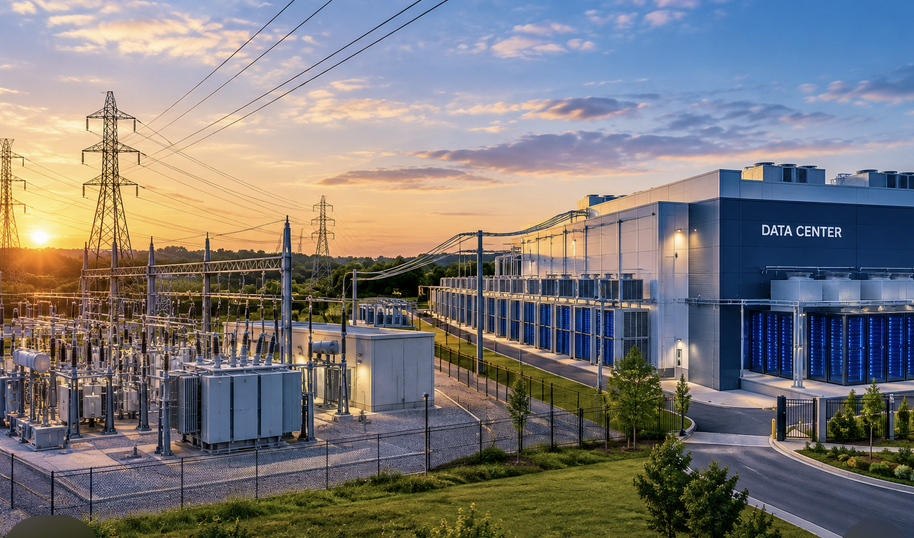
The digital landscape is undergoing a massive structural shift, driven by the exponential growth of cloud computing, big data, and the aggressive rollout of artificial intelligence (AI) workloads. At the heart of this technological revolution is the data center industry. No longer just simple warehouses for servers, modern data centers have evolved into highly sophisticated, power-intensive infrastructure hubs capable of supporting dense high-performance computing (HPC) environments. As enterprises increasingly outsource their IT infrastructure and AI models demand unprecedented levels of computing power, pure-play data center operators have become some of the most critical real estate and technology plays in the global economy.

To understand where this industry is heading, we look at three distinct pure-play giants leading the charge: Equinix, Inc., Digital Realty Trust, and IREN Limited.


1. Equinix, Inc. (NASDAQ: EQIX)

Profile

Equinix is the world’s digital infrastructure company, operating an unrivaled global footprint of over 260 International Business Exchange (IBX) data centers across more than 30 countries. The company distinguishes itself through its focus on retail colocation and interconnection, serving as a physical meeting place where major cloud providers, network service providers, and enterprises connect their networks directly to one another. Rather than just renting bulk space, Equinix monetizes these high-margin ecosystems via its specialized Fabric platform. In early 2026, the company continues to see immense momentum, with roughly 60% of its largest new bookings tied directly to supporting enterprise AI infrastructure deployments.

Latest Financials & Valuation

  • Market Capitalization: ~$106 billion
  • Trailing P/E Ratio: ~74.0
  • Forward P/E Ratio: ~66.9
  • Key Insight: For real estate investment trusts (REITs) like Equinix, net income-based P/E ratios can look artificially inflated due to massive non-cash depreciation charges. Analysts closely track Adjusted Funds From Operations (AFFO) instead. Equinix recently raised its full-year 2026 AFFO guidance to a staggering $42.31 to $43.11 per share, highlighting incredibly strong underlying cash generation.

2. Digital Realty Trust, Inc. (NYSE: DLR)

Profile

Digital Realty Trust takes a massive macro-scale approach to the industry, providing the full spectrum of data center solutions from high-density colocation to massive hyperscale cloud environments. With a global portfolio spanning six continents, Digital Realty is the foundational backbone for the world’s largest technology companies and cloud hyper-scalers. The company’s strategic focus relies heavily on delivering wholesale power capacity at scale. Driven by unprecedented AI and cloud demand, Digital Realty entered mid-2026 boasting a record-shattering $1.8 billion signed-but-not-commenced leasing backlog, reflecting a multi-year pipeline of revenue waiting to come online as facilities finish construction.

Latest Financials & Valuation

  • Market Capitalization: ~$66 billion
  • Trailing P/E Ratio: ~49.0
  • Forward P/E Ratio: ~64.7
  • Key Insight: Similar to Equinix, Digital Realty trades primarily on Core Funds From Operations (Core FFO). Following a dominant Q1 2026 earnings beat where revenue jumped 16% year-over-year to $1.64 billion, management pushed its full-year 2026 Core FFO guidance up to a robust $8.00 to $8.10 per share.

3. IREN Limited (NASDAQ: IREN)

Profile

Formerly known primarily as Iris Energy, IREN Limited represents the next generation of pure-play data center infrastructure designed specifically for energy-dense, high-performance computing (HPC) and next-generation AI workloads. Strategically securing massive quantities of low-cost, 100% renewable energy, IREN has rapidly expanded beyond its roots in Bitcoin mining to build out enterprise-grade AI cloud services. By utilizing specialized liquid-cooled data center designs and deploying fleets of high-end NVIDIA GPUs, IREN has carved out a distinct niche as an ultra-high-density power operator, providing the raw computational horsepower that modern LLMs (Large Language Models) require.

Latest Financials & Valuation

  • Market Capitalization: ~$20.3 billion
  • Trailing P/E Ratio: ~42.5
  • Forward P/E Ratio: ~62.5
  • Key Insight: Unlike traditional data center REITs, IREN is a high-growth technology infrastructure play with a much higher beta (~4.18) and high earnings volatility. It operates with zero dividend payout, opting instead to funnel 100% of its capital back into aggressive capacity expansion and hardware procurement to fuel its fast-growing AI cloud services business.

Summary Table

MetricEquinix, Inc. (EQIX)Digital Realty Trust (DLR)IREN Limited (IREN)
Primary FocusRetail Interconnection & ColocationWholesale Hyperscale & ScaleHigh-Density HPC & AI Cloud
Approx. Market Cap$106 Billion$66 Billion$20.3 Billion
Trailing P/E~74.0~49.0~42.5
Forward P/E~66.9~64.7~62.5
Core Cash Metric2026 Guidance: $42.31–$43.11 AFFO/sh2026 Guidance: $8.00–$8.10 Core FFO/shTTM Revenues: $757 Million

Ultimately, the data center industry has transformed from a quiet real estate niche into the absolute backbone of the modern global economy. Whether through Equinix’s interconnected ecosystems, Digital Realty’s massive wholesale capacity, or IREN’s specialized high-density AI power, these pure-play giants are capturing the multi-trillion-dollar tailwinds of cloud expansion and artificial intelligence. As power constraints and land scarcity become the next major bottlenecks for tech, the companies that control this critical infrastructure will remain the gatekeepers of the digital frontier.

Disclosure: Author didn’t own any of the above at the time the article was written. No investment recommendations are expressed or implied.